
Mass Timber: Rebuilding the Built Environment
Climate Success Chat #57 - June 21, 2026

On a road I frequently bicycle along, I have enjoyed watching the construction of a new mixed use building in east Austin. From the beginning, I could tell it was going to be unique and well built. When I noticed that they were using mass timber for many of the beams and frames, I respected the project even more, because I’d heard about how it could help drastically reduce the carbon footprint of new construction. The idea of wood making a reprise as an innovative building technology is pretty cool. It was the original material humans used to build shelters, and it’s amazing that we can find new ways to create our modern built environment.
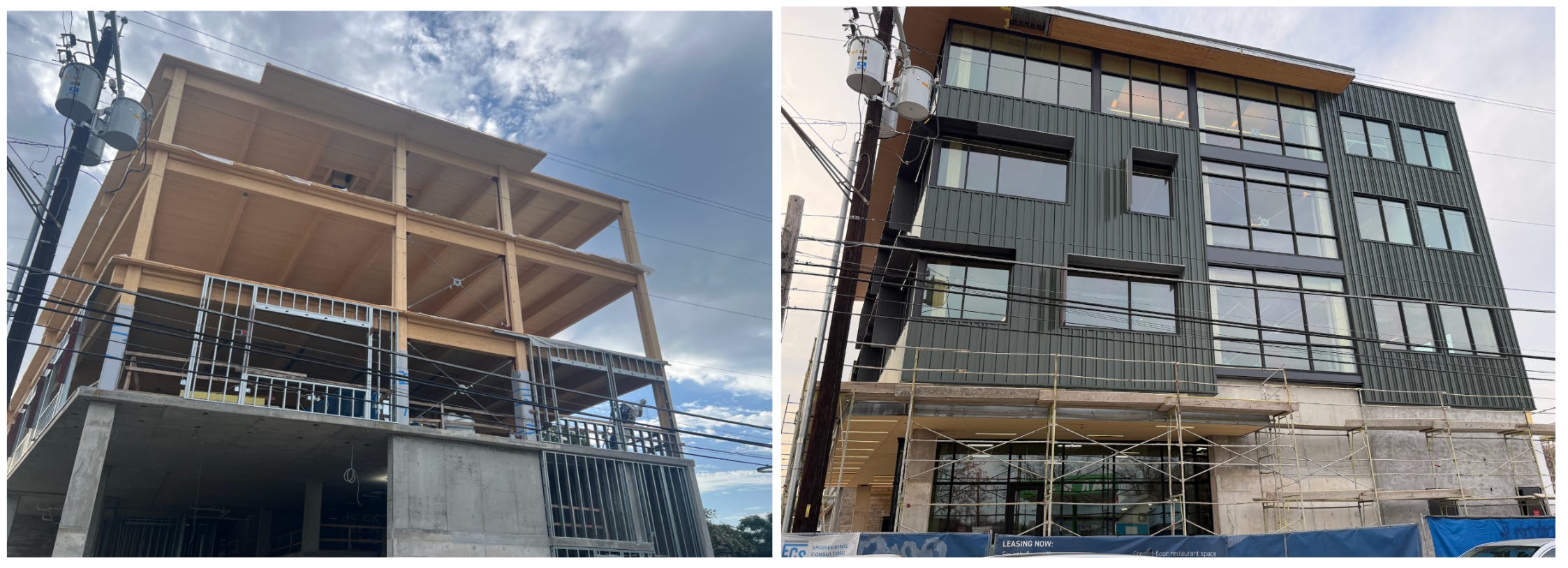
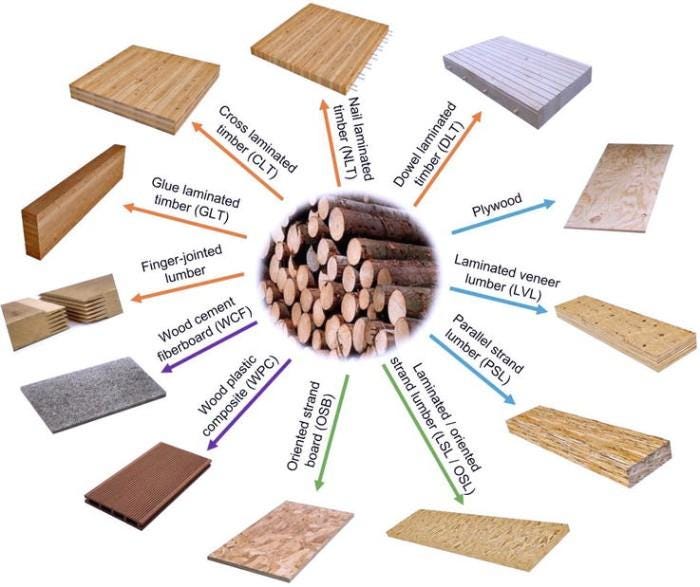
The term mass timber covers a broad set of engineered wood products that include a layering and lamination process that offers a structurally robust, aesthetically compelling, and dramatically lower-carbon alternative to concrete and steel. Laminated wood is not a new process, furniture made with laminated wood was found in the tombs of Egyptian Pharaohs. The new part about modern mass timber is how the composite material and engineering process has allowed manufacturers to upcycle lower value wood into high-quality products. This was perfected in Austria in the 1990s and quickly spread throughout the world. It can be manufactured for specific use cases and modified based on how it is layered, glued, and treated.
Before even considering the climate benefits of mass timber, it’s worth looking at the other advantages it has over concrete and steel construction. Because it’s pre-manufactured, using mass timber can dramatically reduce construction time and costs. It is generally much lighter than concrete which reduces how deep foundations must be dug. The lighter weight also makes it more earthquake resistant. What might surprise you is that mass timber is better than steel in fires. When steel is heated, it buckles and bends. Mass timber for tall buildings chars on the outside creating a protective barrier while keeping the structural core strong. In safety tests, it was subjected to temperatures exceeding 1,800 Fahrenheit and lasted over 3 hours.
All of these benefits are why mass timber is growing in popularity but it wouldn’t have been possible if not for the advocacy and education of sustainable leaders in the construction industry. Susan Jones is the founder of atelierjones, an all-woman-owned architecture firm in Seattle. In 2015, she built one of the first cross-laminated timber homes in the United States. The following year she joined the Ad Hoc Committee on Tall Wood Buildings focused on rewriting American building codes to allow for mass timber construction. That work led to the 2021 IBC tall mass timber provisions adopted across 38 states today. I first learned about Susan’s work watching the Women of Carbon documentary telling the story of women decarbonization leaders across many sectors. Her book, Mass Timber | Design and Research, is one of the best resources for design firms and architects who want to learn more about mass timber solutions.
These benefits are reason enough to use mass timber in more of our buildings but I get really excited when I hear about how it also has so many inherent climate benefits. Concrete production is responsible for up to 8% of CO2 emission worldwide. Mass timber reduces the amount of poured cement that needs to be used. Additionally, the wood used in mass timber sequesters the carbon that the trees captured while they were growing. When used in buildings, the carbon doesn’t enter back into our atmosphere like it does when wood burns or rots. There’s less construction waste overall since most mass timber is made to the specifications of the buildings it’s being used in. There’s also a real environmental wellness benefit to using wood. Studies have shown a significant lift in people’s sense of wellbeing when living and working in buildings made of wood.
Each cubic meter of cross-laminated timber (CLT) stores approximately 0.9 tonnes of carbon dioxide. Mass timber reduces embodied carbon by up to 73% compared to steel and concrete. That means that switching to mass timber in more of our buildings could have massive benefits. Yale estimates that switching to CLT for 30-60% of new construction could reduce lifecycle greenhouse gas emissions by at least 25 gigatons of CO2 equivalent in addition to driving more forestry programs for managed and harvested trees.
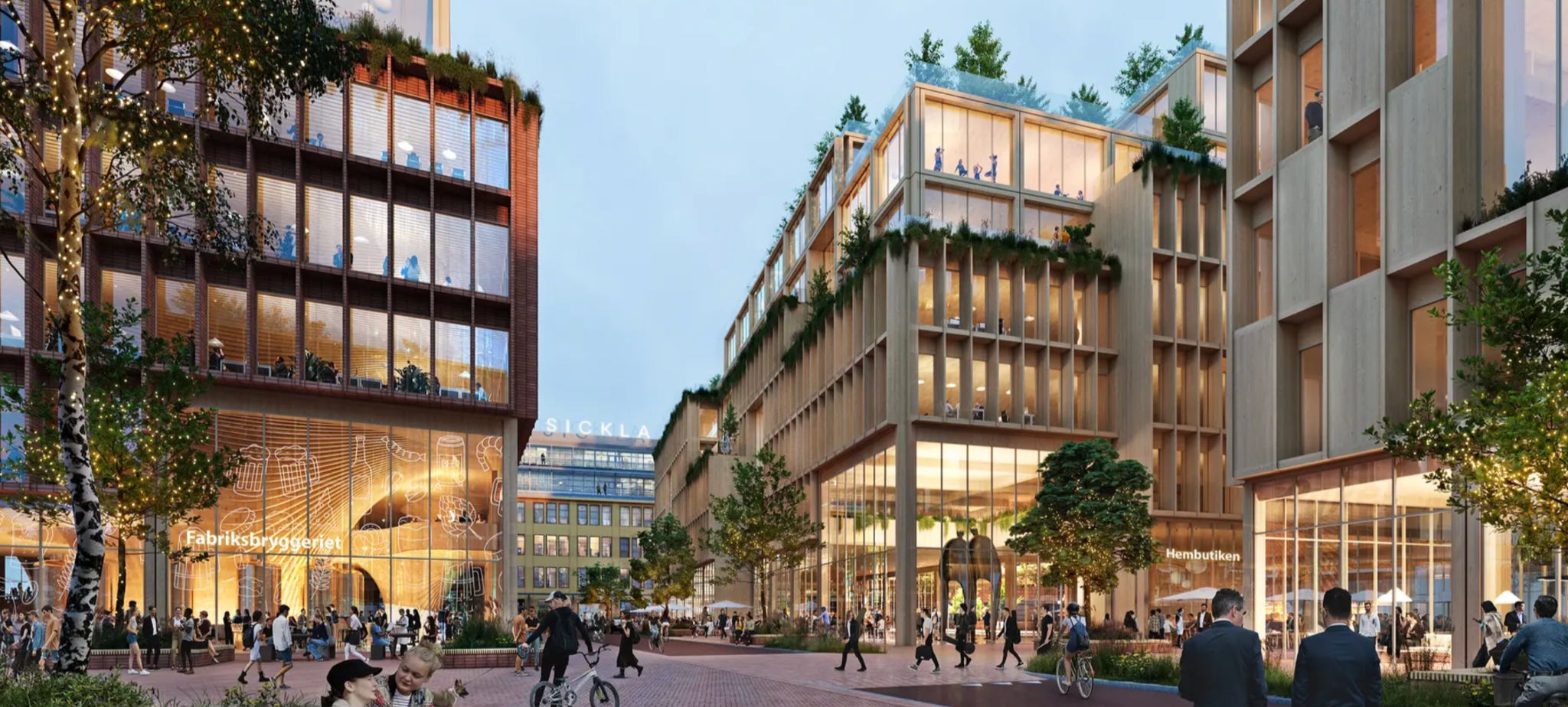
You might think that it would be challenging to build so much with mass timber, but the new production process allows us to do much more with wood than we ever could before. The tallest mass timber building in the world is the Ascent MKE at 25-stories high in Milwaukee, WI. From the outside, you don’t see the wood beams but the inside can still feature the warm tons of the mass timber. In Sweden, the Stockholm Wood City project is using mass timber to create thousands of homes and offices totalling 2.7M Sq Ft. Here in Austin, mass timber will be used for major components of our new convention center. Examples like these will inspire more creative and expansive projects.
I’m excited to see solutions like mass timber grow in popularity. It’s another example where the sustainable way of doing something can be better than the defaults which were developed without an understanding of the negative impacts they would have. For years, the built environment has been at odds with nature and balance on our planet. The buildings that we live and work in should be a reflection of our sense of belonging in our environment. Mass timber and other sustainable construction methods can help bring us back into sync with our global ecosystem.