
Coping with US Climate Policy and taking a Global View at COP30
Climate Success Chat #42 - Oct 3, 2025

I’ve been writing a lot about US climate policy and advocacy for the last few months. It’s warranted to raise awareness about the detrimental impact the current administration is having on our climate goals, health, and economy. That said, remember that there’s still progress being made on many fronts. I wasn’t at the largest ever Climate Week in NYC last week, but I hear that the sentiment and dialogue was overwhelmingly positive and pragmatic. We have new challenges, but the climate community is finding opportunities in the obstacles. On a global scale, there’s even more reason to be optimistic. Though the US has dropped out of the Paris Agreement (only in the company of Iran, Libya, and Yemen), all other countries are preparing to reaffirm their pledges to decarbonize at COP30 set for November 2025 in Belém, Brazil.
COP: A short recap of what it is
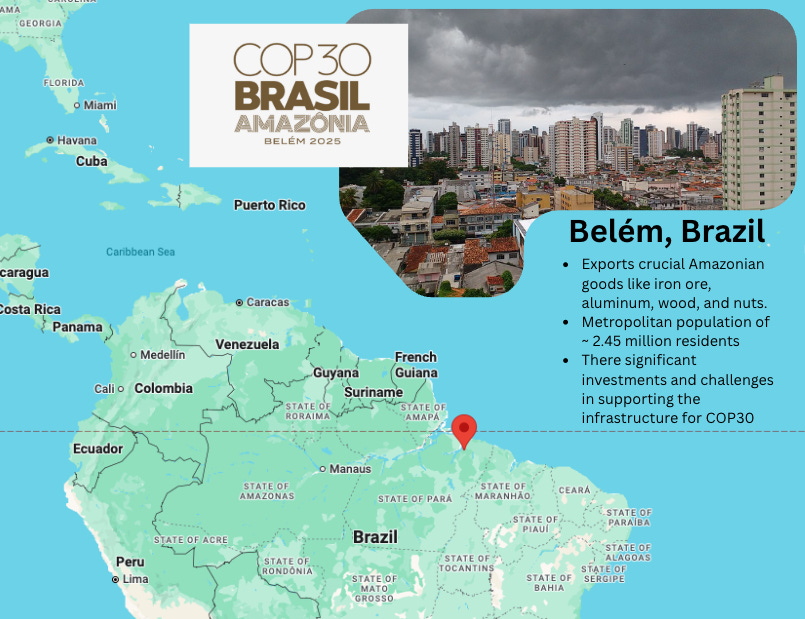
COP stands for Conference of the Parties, the decision-making body of the United Nations Framework Convention on Climate Change (UNFCCC). The UNFCCC was signed in 1992 at the Rio Earth Summit, creating a global commitment to prevent dangerous levels of human-caused climate change. Each year since 1995, governments have met at COP to assess progress, negotiate agreements, and coordinate global action. This COP is a 30th anniversary homecoming of sorts since it is being held in Brazil. The location is significant since Belém is considered the gateway to the Amazon, one of the most critical ecosystems on our planet.
In the early years of COP, the focus was on diplomacy, focusing on negotiations to determine how the framework would function and what binding targets would be set. This is what happened in two of the most well-known COPs:
In 1997, Kyoto (COP3) set the first binding targets for developed countries to cut emissions.
In 2015, Paris (COP21) saw a landmark agreement when nations pledged to limit warming to “well below” 2°C, aiming for 1.5°C.
After Paris, countries agreed to submit national climate plans called NDCs (Nationally Determined Contributions). This is why the focus of COPs has shifted to implementation and measurement of progress. Starting in 2023 and completed every five years, a Global Stocktake (GST) takes inventory measuring efforts to reduce emissions, build resilience, and build financial systems to support the transition.
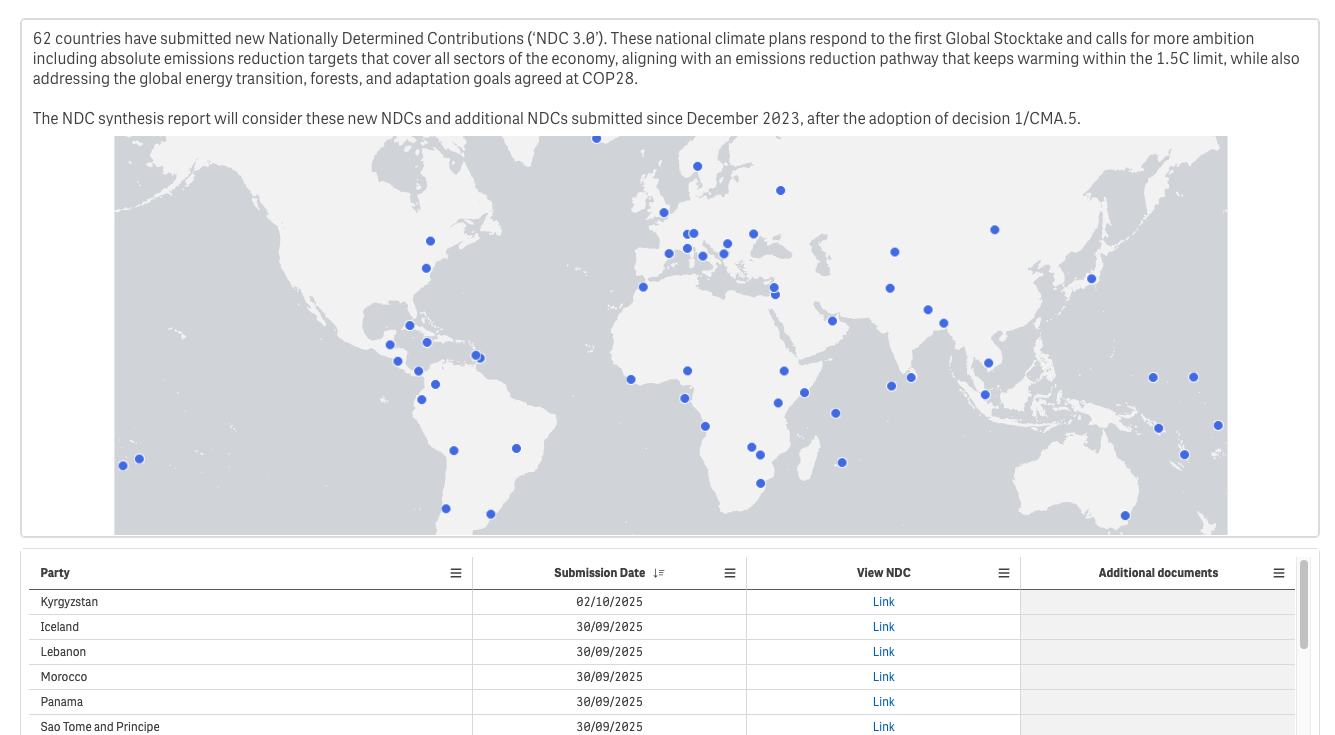
The Global Stocktake shows that the global community is lagging on the commitments that we originally made. However, revised NDCs and other global negotiations and rulings should tighten and accelerate nations’ commitments. NDC 3.0 reports are due before COP30 next month.
Why pay attention to COP?
As an individual, local work and action is still where you can make the most impact. That said, COP is still important to pay attention to for several reasons. Outside of the political negotiations, ideas surfaced at these gatherings inform local policy, business choices, and advocacy worldwide. Over the two weeks, it’s expected between 45,000 and 60,000 participants will be involved from every country in the world. Increasingly there’s an effort to make sure the voices of indigenous people and the global south are included in the most important discussions at COP.
Some of the key decisions that are expected to come out of this COP are:
Resolutions on rules to govern international carbon trading, which you’ll hear referenced as Article 6. If this is done well, it could drive billions of dollars in new clean projects worldwide. If not, the integrity of carbon trading will continue to be questioned.
Stronger NDCs to support where we are behind in the GST.
New global finance goals to replace the approximate $100B/year pledges that have not been fulfilled.
How a new fund on adaptation & losses will deliver resources.
Where to follow updates
As we get closer to COP30 running from Nov 10-21, which is just 37 days away, you can expect more global press covering the events. The lack of the US participation will be mentioned a lot, but I encourage you to pay more attention to what many of the other key countries are doing. For example, last week China shared that it would be making its first-ever absolute reduction target in an updated NDC submitted for this COP. The global arena will continue to drive progress, even without the participation of this US administration.
Places you can learn more or follow updates:
The Outrage+Optimism Podcast has rebranded their episodes to “Inside COP” to provide a detailed analysis of COP30 leading up to the gathering.
The UNFCCC has a feed of the latest updates on their COP30 site.
The Pulitzer Center’s Road to COP30 has a curation of journalism, events, and key resources covering issues that will be discussed at COP30.
One of the biggest challenges of climate change is its global scale, but it can also be a major resource and source of strength as we tackle how to solve it. Events like COP are a reminder that what happens here in the United States is not the final determining factor of our success. I’m excited to follow along and use what I learn to drive my own actions and decisions.